Search Results
Searched for: Subject begins with Science
Resources 1 - 80 of 110
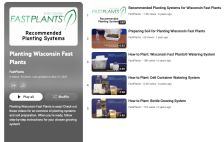
This YouTube playlist curated by the Wisconsin Fast Plants Program provides an overview and then demonstrates planting Fast Plants in three wicking growing systems that are recommended for growing Fast Plants. Two of the recommended systems are built from easily found recycled plastic containers:...
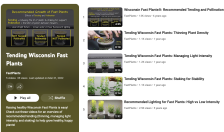
This YouTube playlist curated by the Wisconsin Fast Plants Program provides an overview and then demonstrates recommended tending (thinning, managing light intensity, and staking) to help grow healthy, happy plants!
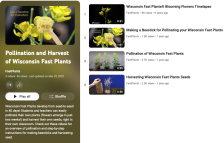
This YouTube playlist curated by the Wisconsin Fast Plants Program provides an overview and then demonstrates how to pollinate and harvest seeds from Fast Plants.
Preparing Your Students for the Future: Undergraduate Research Experiences with RapidCycling Brassic
This article with practical instructions about using Fast Plants in undergraduate research experiences was published as an addendum to a workshop given at the 2017 ABLE Conference in Madison, WI. Contains ideas for helping students at high school and undergraduate levels to conduct independent...
Who knew that rocket science could have so much in common with botany and plant pathology? This is a human interest and science story that documents from firsthand accounts and artifacts the historical context and scientific events relevant to an important collaborative Fast Plant investigation on...
This investigation begins with a phenomenon that is evidenced in most every produce aisle: Many of the vegetables that botanists classify as Brassica look and taste different. This investigation aligns with middle and high school Next Generation Science Standards as well as with agricultural science...
This blog post, written by Frieda Reichsman, discusses how educators can implement three-dimensional teaching methods into classrooms and meet the Next Generation Science Standards. The article introduces the 3D Teacher Moves Table, a lesson-planning tool created by Hedi Lauffer at Wisconsin Fast...
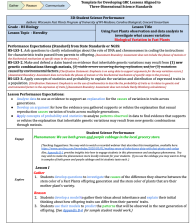
In this 26-page investigation—co-developed for secondary grades by teachers, the Wisconsin Fast Plants Program at UW-Madison, The Concord Consortium data scientists, and developers from Carolina Biological Supply, and Brett Moulding—learners investigate variation and inheritance in the “three...
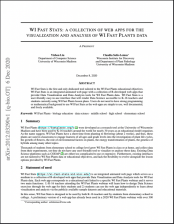
This 5-page article is written by Yizhou Liu and Claudia Solis-Lemus and introduces Wisconsin Fast Stats, a collection of R-developed web apps of data analysis and visualization tools for educators that accompany learning activities from Wisconsin Fast Plants. The article covers topics such as...
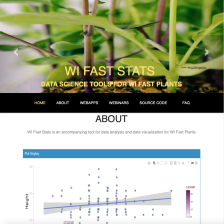
WI Fast Stats is a browser-based data analysis and visualization tool that can be used alongside Wisconsin Fast Plants. WI Fast Stats has a set of R-developed unique web apps that corresponds to specific WI Fast Plants webinars and dataset (such as Cotyledon, or Ecosystem), to make data analysis...
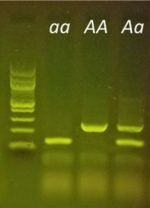
This blog post, written by the MiniPCR Team, describes the use of biotechnology kits and equipment (available from multiple suppliers) in the classroom to help students and learners understand the connection between observable phenotypic traits and underlying genotypes. These investigations can be...
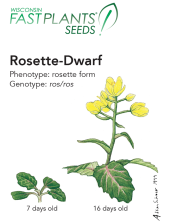
This is a page on the Fast Plants website, describing the Rosette-Dwarf variety of Fast Plants (Brassica rapa). This page includes suggestions for investigations and teaching applications using this seed variety.
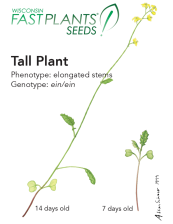
This is a page on the Fast Plants website, describing the Tall Plant variety of Fast Plants (Brassica rapa). This page includes suggestions for investigations and teaching applications using this seed variety.
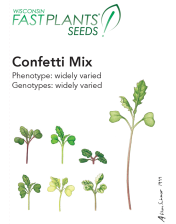
This is a page on the Fast Plants website, describing the Confetti Seed Mix variety of Wisconsin Fast Plants (Brassica rapa). Confetti Mix includes phenotypes from several Fast Plants varieties, including purple stem, non-purple stem, yellow-green leaf, rosette-dwarf, tall plant, petite, variegated,...
This free, 16-page downloadable PDF facilitation guide from 4-H offers hands-on experiments using Fast Plants to investigate how light and gravity influence seed germination and growth. Teachers will find structured activities, background information, and discussion prompts exploring phototropism,...
This 7-minute animated YouTube video provides a comprehensive overview and guide for teachers preparing to facilitate the Clover by 4-H Space Seeds investigation (that also has a free facilitation guide available from 4-H here: https://4-h.org/clover/activities/space-seeds/).
Title: Space Seeds...
Download this complete unit of instructions to conduct an ecosystem inquiry. In this investigation, students have the opportunity to witness first-hand the dynamic relationship between Brassica butterflies and Wisconsin Fast Plants. Students are responsible for tending the butterflies and plants...
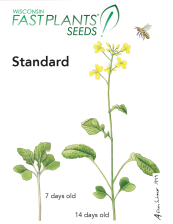
This is a page on the Fast Plants website, describing the Standard variety of Wisconsin Fast Plants (Brassica rapa). This page includes suggestions for investigations and teaching applications using this seed variety, including use as a model organism to teach about the plant life cycle and plant...
Download this complete and coherently designed, middle school level unit to teach fundamental concepts that underpin the theory of evolution. The unit was collaboratively designed by teachers, college faculty & staff, and the Fast Plants Program at UW-Madison to support student-centered...
This Immersion Unit provides a coherent series of lessons designed to guide students in developing deep conceptual understanding that is aligned with the National standards, key science concepts, and essential features of classroom inquiry (as defined by the National Science Education Standards)....
Turnips, Chinese cabbage and Wisconsin Fast Plants (Rbr) look very different. Yet, they actually belong to the same species. This means that they have the same number of chromosomes and they can cross breed and produce fertile offspring. But how can you prove that plants that look so different are...
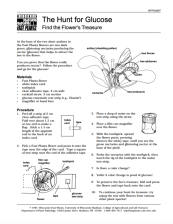
Background information and activity investigating the Fast Plant nectaries and their functions.
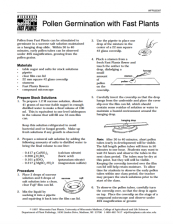
Protocol for germinating Fast Plants pollen in a sucrose-salt solution
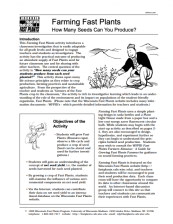
This Farming Fast Plants activity introduces a classroom investigation that is easily adaptable for all grade levels and designed to engage teachers and students as investigators. The activity has the practical outcome of producing an abundant supply of Fast Plants seed for future classroom use and...
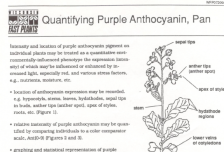
This PDF resource depicts the locations on rapid cycling Brassica rapa where anthocyanin expression is commonly seen. Ways of roughly estimating the relative intensity of purple anthocyanin expression are also presented.
Download this complete set of lessons for an elementary, NGSS-aligned inquiry that foregrounds engineering practices. During the days that are supported by this investigation, students observe flowers on their 14 to 16 day old Fast Plants along with bee structures, learning to connect how the shape...
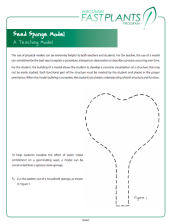
This 2-page handout gives instructions for making the seed sponge model that was developed by the Wisconsin Fast Plants Program as a tool for learning about germination. Visualizing what is inside a seed and how those structures function during germination is modeled, using a simple kitchen sponge....
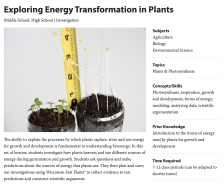
In this set of lessons and Fast Plants experiment, students investigate how plants harness and use different sources of energy during germination and growth. Students ask questions and make predictions about the sources of energy that plants use. They then plan and carry out investigations using...
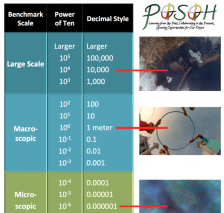
This is a printable poster resource developed by a collaboration of educators in the POSOH Project for teaching about systems and scale. This poster correlates with an excerpt from the video Cosmic Voyage about systems and scale, narrated by Morgan Freeman. A debrief discussion of that video excerpt...
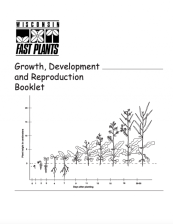
A 32-page booklet, containing complete instructions for activities at each life cycle stage. The booklet also includes important background information about plant physiology and how to grow Fast Plants. A Growth, Development and Reproduction kit is available. You can also conduct all the...
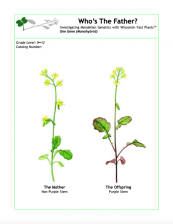
In this investigation, students will gather their own evidence to explain how inheritance works. As they observe three generations of Wisconsin Fast Plants, students will unravel a mystery of paternity: What is the father’s phenotype? Is it the same as the mother’s phenotype or the offspring’s...
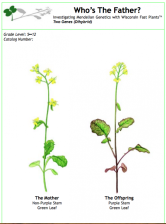
Download the complete instructions for a high school level inheritance and genetics inquiry, using Wisconsin Fast Plants. In this investigation, students gather their own evidence to explain how inheritance works. As they observe three generations of Wisconsin Fast Plants, students unravel a...
This Immersion Unit provides a coherent series of lessons designed to guide students in developing deep conceptual understanding that is aligned with the standards, key science concepts, and essential features of classroom inquiry (as defined by the National Science Education Standards).
Unit...
Description: In this activity students become acquainted with the anatomy and biology of seeds. They will use lenses and scales and make drawings to scale. Students will measure and calculate magnifications and they will begin to understand relationships among these. They will organize and summarize...
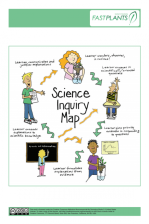
Download and print this colorful "Science Inquiry Map" Poster featuring the web of inquiry processes as described by the Five Essential Features of Inquiry from the National Science Education Standards. In addition, the model of inquiry described by the Five Essential Features aligns directly with...
This document is the step-by-step instructions for planting Fast Plants in a deli-container growing system like is used in Reading Green. The instructions include measurements that are then integrated into mathematics problems that are on the flip side of the planting instructions. The instructions...
This pdf includes background information and an activity for engaging students in the processes that occur during pollination, fertilization and seed development in Fast Plants. Pollination is explained and illustrated and an activity for students to pollinate Fast Plants and observe reproductive...
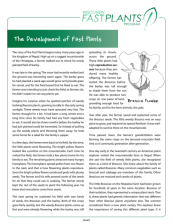
This is "The Story of Fast Plants" - a short story of the origins of Brassicas and the work of Dr. Paul Williams, developing Brassica rapa. Reading level ~7th grade.
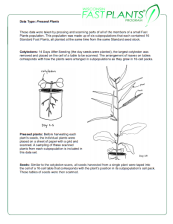
These data sets were meticulously collected by Dr. Paul Williams in an investigation in which we were interested in learning about how nutrient limitations effect a variety of easily observable and measureable Fast Plant traits. Observations were made and recorded at different points in the plants'...
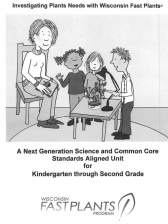
Download this comprehensive, 60-page elementary unit that was co-developed by the Fast Plants Program and Emily Miller (ELA/science elementary science education specialist) who helped author the Next Generation Science Standards) as an exemplar for supporting three-dimensional learning. Developed in...
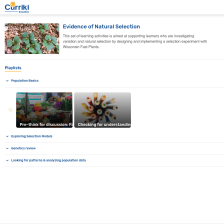
This resource, provided by Wisconsin Fast Plants and CurrikiStudio, contains a set of six different learning activities that can be implemented in classrooms to teach natural selection. Organized in playlists, these interactive lessons guide students through understanding and applying knowledge of...
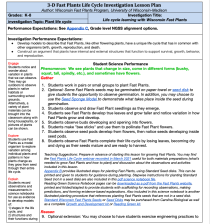
This comprehensive Open Source lesson plan is designed for Kindergarten through Middle School level students to learn about life cycles, plants needs, and plant structures & their functions through hands-on investigations with Wisconsin Fast Plants. Depending on the grade level, students engage at...
This 5-page handout aims to help students and their adult mentors explore topics and questions about the natural world and/or Fast Plants growth and development that could be investigated through research and experimentation. The handout is intended to inspire scientific question development that...
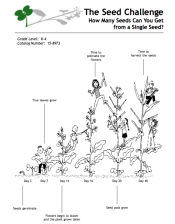
A 23-page PDF file (644 KB) with a complete set of activities for elementary students (also effective in middle school) to learn about the life cycle of flowering plants with a focus on reproduction. Students predict how many seeds their Fast Plant will produce and engage in planting, growing,...
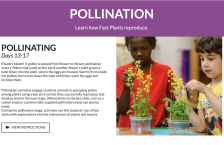
This webpage from the Fast Plants website explains how to pollinate Fast Plants, including instructions for making bee sticks and pollination videos and tips.
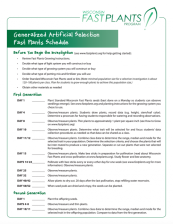
This fill-in-the-blank timeline is a planning tool for teachers to use when figuring out when to begin the steps associated with conducting a two-generation artificial selection experiment using Fast Plants. Teachers preparing for any selection experiment will find this timeline helpful, including...
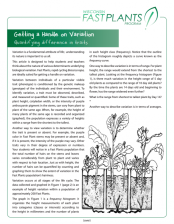
This article is designed to help students and teachers think about the nature of various determinants underlying biological variation. Teachers facilitating any selection investigation will find this background information helpful, including those planning for the AP Biology Lab 1 of Big Idea 1:...
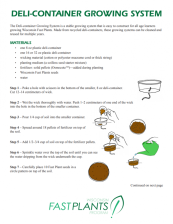
Illustrated instructions for constructing and planting in the Fast Plants deli-container growing system. This is a stable growing system that is easy to construct for all age learners, and works well for growing Wisconsin Fast Plants. Made from recycled deli-containers, these growing systems can be...
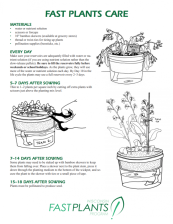
This four-page handout explains the key steps to follow when caring for Wisconsin Fast Plants (Brassica rapa) throughout their life cycle, from sowing through harvesting seeds. This handout includes information about the materials needed, methods for tending and caring for your plants, and...
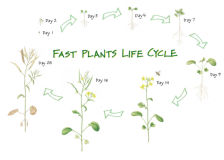
This is a jpg version of the Wisconsin Fast Plants life cycle that is found on our website. These Fast Plant illustrations were drawn by Alison Schroeer.
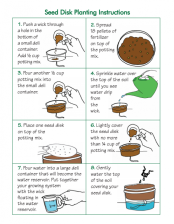
Illustrated instructions for constructing and planting seed disks in the Fast Plants deli-container growing system. This is a stable growing system that is easy to construct for all age learners, and works well for growing Wisconsin Fast Plants. Made from recycled deli-containers, these growing...
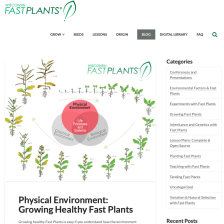
Read this blog post for background information about the relationship between the physical environment and life processes and systems in Fast Plants.
Growing healthy Fast Plants is easy if you understand how the environment can affect growth and development. Three broad categories of environmental...

Sign up for a free account on the Gizmo website (https://www.explorelearning.com/index.cfm?method=Controller.dspFreeAccount) for free access to two simulations that were collaboratively developed by the teams at Explore Learning and the Wisconsin Fast Plants Program of the University of...
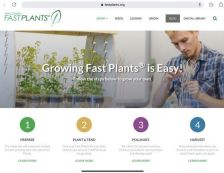
Part of the Fast Plants website, the "Grow" section offers complete instructions for preparing to grow, planting, tending, pollinating, and harvesting Wisconsin Fast Plants seeds. Instructions include text descriptions, photos, videos, and PDF instructions that can be downloaded, including a...
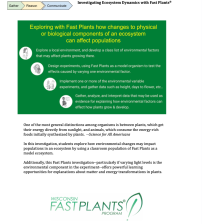
This 16-page resource, from Wisconsin Fast Plants, provides a "complete Open Source investigation into ecosystem dynamics that can be adapted to any grade level." In this Google Document, readers will find the investigation includes a lesson plan, descriptions of standards alignment, tips for...
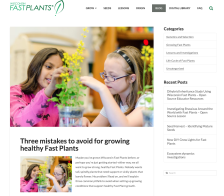
This blog post from the Wisconsin Fast Plants Team describes three ways to optimize your growing environment to grow healthy Fast Plants.
Tips for growing healthy plants are focused around the following three concepts, with descriptions of ideal environmental conditions for each:
1. Not enough...
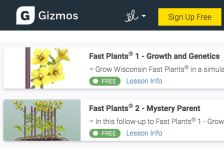
This blog post on the Wisconsin Fast Plants website features the recently released Wisconsin Fast Plants genetics simulations, powered by ExploreLearning Gizmos. Sign up for a free account on the Gizmo website (https://www.explorelearning.com/index.cfm?method=Controller.dspFreeAccount) for free...
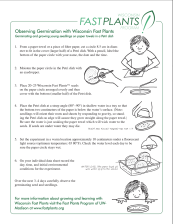
Illustrated instructions for germinating Fast Plants seeds on paper towel in a petri dish set into a water reservoir to maintain constant moisture levels. Designed to be printed and used as a resource with learners.
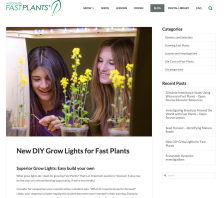
This blog post by the Fast Plants Team provides a materials list and instructions for a Do-It-Yourself, LED Grow Light that is ideal for Fast Plants growth. This grow light uses cost-effective materials that can be obtained online and from a local hardware store. The light is easy to construct,...
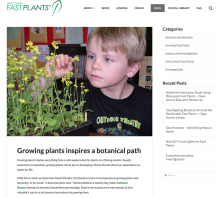
This blog post shared on the Wisconsin Fast Plants website is a guest post by Daniel Murphy, author of the weekly blog Awkward Botany. In this post, Daniel shares his firsthand account of his experiences growing plants and becoming "a bona fide plant nerd." This post is a great example of the value...
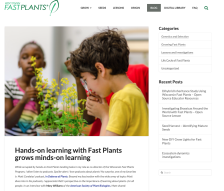
This blog post on the Fast Plants website shares content from podcaster, Matt Candeias, host of the In Defense of Plants podcast. In an interview with Mary Williams of the American Society of Plant Biologists, Matt discusses the important connection fostered between physical experiences and...
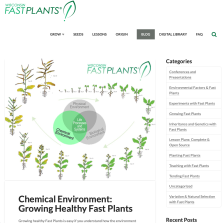
Read this blog post for background information about the relationship between the chemical environment and life processes and systems in Fast Plants. Growing healthy Fast Plants is easy if you understand how the environment can affect growth and development. Three broad categories of environmental...
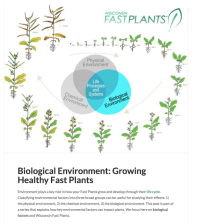
Read this blog post for background information about the relationship between the biological environment and life processes and systems in Fast Plants.
Growing healthy Fast Plants is easy if you understand how the environment can affect growth and development. Three broad categories of...
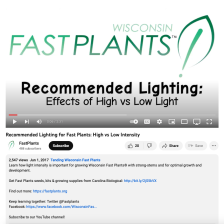
This video is provided by Wisconsin Fast Plants, and introduces light intensity and its impact on plant growth. The video gives an overview of the effects of high light and low light intensities, and also includes a 20-day time lapse so the viewer can observe the effects that high and low light...
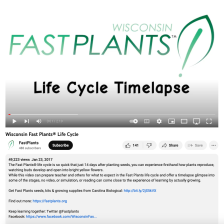
This video is provided by Wisconsin Fast Plants, and introduces the plant life cycle. The video features a 40-day time lapse of the Fast Plants from seeds during germination, through flowering and reproduction, until harvesting seeds at the end of the cycle. This recording runs for 02:19 minutes in...
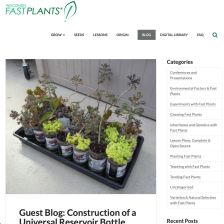
This blog post, written by Joel Cryer of Bottle Biology, provides instructions to construct an inexpensive, self-watering planter that can be used to grow Wisconsin Fast Plants. The blog covers the materials and tools needed, as well as step-by-step instructions to create a universal reservoir...
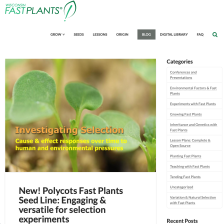
This blog post from the University of Wisconsin-Madison's Wisconsin Fast Plants, describes an investigation that educators can implement in the classroom to facilitate students' learning about variation and natural selection through firsthand observations and hands-on data collection in a very short...
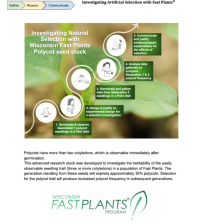
This lesson plan, from the University of Wisconsin-Madisons Wisconsin Fast Plants, is for a high school biology investigation into evolution and artificial selection while using Fast Plants polycot seeds. The lesson plan describes student science performance for in-classroom learning as well as...
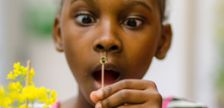
This blog post from the Fast Plants team addresses the question "can bee sticks sting?" (no, bee sticks cannot sting) and provides information on the use of bee sticks for pollination of Fast Plants in the classroom.
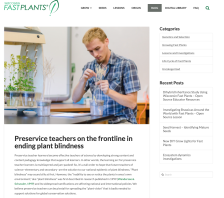
This blog post on the Fast Plants website discusses the concept of plant blindness (the inability to see or notice the plants in one's own environment) and the importance of ending plant blindness and supporting plant vision. Fast Plants are an effective introduction to growing and noticing plants:...
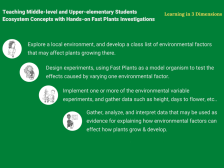
This blog post from the Wisconsin Fast Plants website features an NGSS-aligned Open Source Lesson Plan for Investigating Ecosystem Dynamics with Fast Plants. The featured lesson plan is available to be downloaded and edited as needed via Google Drive. The investigation challenges students to gather...
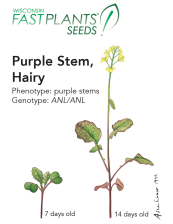
This is a page on the Fast Plants website, describing the Purple Stem, Hairy variety of Fast Plants (Brassica rapa). This page includes suggestions for investigations and teaching applications for using this seed variety.
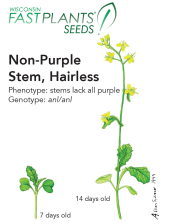
This is a page on the Fast Plants website, describing the Non-Purple Stem Hairless variety of Fast Plants (Brassica rapa). This page includes suggestions for investigations and teaching applications using this seed variety.
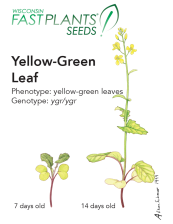
This is a page on the Fast Plants website, describing the Yellow-Green Leaf variety of Fast Plants (Brassica rapa). This page includes suggestions for investigations and teaching applications using this seed variety.
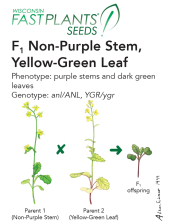
This is a page on the Fast Plants website, describing the F1 Non-Purple Stem, Yellow-Green Leaf variety of Fast Plants (Brassica rapa). This page includes suggestions for investigations and teaching applications using this seed variety, including use as a model organism in teaching Mendelian...
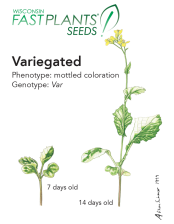
This is a page on the Fast Plants website, describing the Variegated variety of Fast Plants (Brassica rapa). This page includes suggestions for investigations and teaching applications using this seed variety.
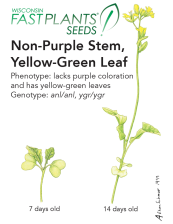
This is a page on the Fast Plants website, describing the Non-Purple Stem, Yellow-Green Leaf variety of Fast Plants (Brassica rapa). This page includes suggestions for investigations and teaching applications using this seed variety.
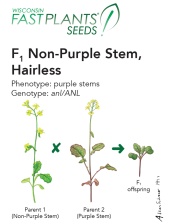
This is a page on the Fast Plants website, describing the F1 Non-Purple Stem variety of Fast Plants (Brassica rapa). This page includes suggestions for investigations and teaching applications using this seed variety, including use as a model organism in teaching Mendelian genetics with a monohybrid...
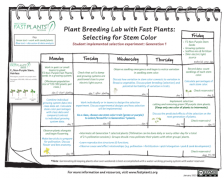
This document includes a timeline and calendar to serve as planning tools for teachers to use when figuring out when to begin the steps associated with conducting a two-generation artificial selection experiment using Fast Plants. This investigation focuses on selection for the stem color trait....
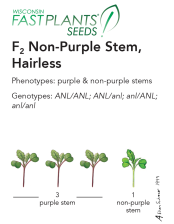
This is a page on the Fast Plants website, describing the F2 Non-Purple Stem variety of Fast Plants (Brassica rapa). This page includes suggestions for investigations and teaching applications using this seed variety, including use as a model organism in teaching Mendelian genetics with a monohybrid...
Publisherv
Creatorv
Languagev
Phenotypic Traitv
Genotypev
Speciesv
Materials Development Erav
Media Formatv
Audiencev
Subjectʌ
- ☐ Arts
- ☐ Educational Technology
- ☐ Foreign Languages
- ☐ Language Arts
- ☐ Mathematics
- ☒ Science
- ☐ Agriculture
- ☐ Biological and life sciences
- ☐ Chemistry
- ☐ Earth science
- ☐ Ecology, environment
- ☐ Entomology
- ☐ General science
- ☐ Growth, development, life cycle
- ☐ History
- ☐ Informal education
- ☐ Inheritance, genetics
- ☐ Natural history
- ☐ Physical sciences
- ☐ Physiology
- ☐ Process skills
- ☐ Technology
- ☐ Social studies
Resource Typev
Classificationv
Education Levelv